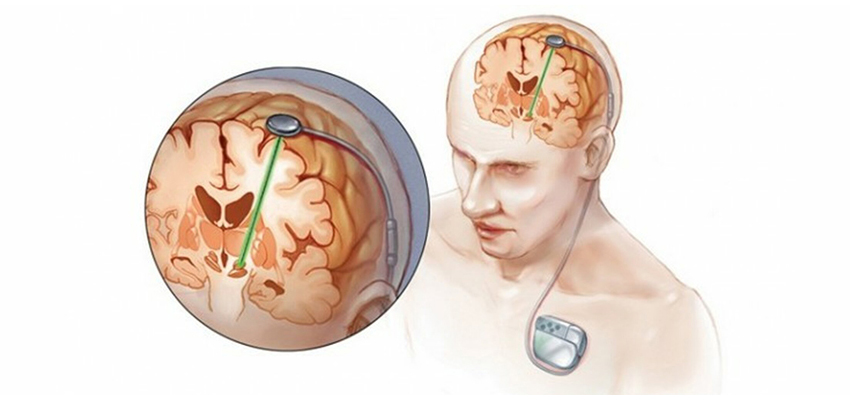
Deep Brain Stimulation Surgery
Deep Brain Stimulation (DBS) is a surgical procedure in which electrodes are implanted into specific areas of the brain to deliver controlled electrical impulses. It is an established and highly effective treatment for movement disorders such as Parkinson's disease, essential tremor, and dystonia that are no longer adequately controlled by medications alone. Our neurologist provides complete pre-surgical evaluation, patient selection, and long-term post-DBS programming and care.
What is Deep Brain Stimulation?
DBS works similarly to a cardiac pacemaker but for the brain. A neurostimulator device (implanted under the collarbone) sends electrical signals through wires to electrodes placed in targeted brain regions — such as the subthalamic nucleus (STN) or globus pallidus interna (GPi). These signals modulate abnormal brain activity that causes movement disorder symptoms, providing significant and sustained relief.
Conditions Treated with DBS
Parkinson's Disease
DBS significantly reduces tremor, rigidity, bradykinesia, and motor fluctuations in appropriately selected Parkinson's patients, allowing reduction in medications.
Essential Tremor
DBS of the thalamus (Vim nucleus) provides dramatic tremor control when medications fail.
Dystonia
GPi-DBS is highly effective for generalized and cervical dystonia, especially in primary (genetic) forms.
Obsessive Compulsive Disorder (OCD)
DBS is approved for treatment-resistant OCD in selected specialized centers.
Who is a Candidate for DBS?
- Parkinson's patients with good levodopa response but motor fluctuations or dyskinesias
- Essential tremor severely affecting quality of life and not controlled by medications
- Generalized or segmental dystonia not responding to oral medications or Botox
- No significant cognitive impairment or active psychiatric illness
- Patients who have undergone thorough neurological and neuropsychological evaluation
The DBS Process
Pre-Surgical Evaluation
Comprehensive neurological assessment, MRI Brain, levodopa challenge test, neuropsychological testing, and multidisciplinary team review.
Surgery
Electrode implantation performed under general or local anesthesia with stereotactic guidance; neurostimulator implanted in a separate procedure.
Programming & Follow-Up
Post-operative programming of stimulation parameters to optimize symptom control; regular follow-up for ongoing adjustment.
Benefits of DBS
- Significant, sustained improvement in motor symptoms
- Reduction in medication doses and side effects
- Improved quality of life and functional independence
- Adjustable and reversible (unlike ablative surgeries)
- Long-term effectiveness over years
When Should You See a Neurologist about DBS?
- Parkinson's disease with medication "wearing off" or troublesome dyskinesias
- Severe essential tremor limiting daily activities
- Generalized dystonia poorly controlled by medications and Botox
- Good overall health and motivation for surgical intervention
- Interest in exploring surgical options after thorough neurological assessment
Why Choose Us?
- Experienced Consultant Neurologist specializing in Movement Disorders
- Expert Pre-Surgical Evaluation & Patient Selection
- Coordinated Care with Neurosurgical Team
- Evidence-Based Neurological Care
- Compassionate Patient & Family-Centered Approach
- Long-Term Post-DBS Programming & Follow-Up